Boards are usually given a view of strategy through confidence. The plan is coherent. The ambition is clear. The executive team sounds aligned. The numbers remain broadly acceptable.
That is often precisely when structural weakness is hardest to see. Because strategy rarely falters first in the deck. It falters first in the organisation’s ability to carry it cleanly.
By the time that weakness becomes visible in missed delivery, repeated slippage, or declining confidence in execution, it is often no longer emerging.
It is already embedded.
Why Boards Often See the Problem Late: Structural weakness rarely announces itself in structural terms. It tends to arrive disguised as something more familiar:
- slower decisions explained as prudence
- Delivery friction is explained as complexity
- Executive overload is explained as the cost of growth
- repeated escalation explained as strong leadership attention
Each explanation may contain some truth. But taken together, they can conceal a more consequential problem: the operating conditions required to execute the strategy are weakening beneath the confidence attached to it. That is not yet failure. But it is often how failure begins.
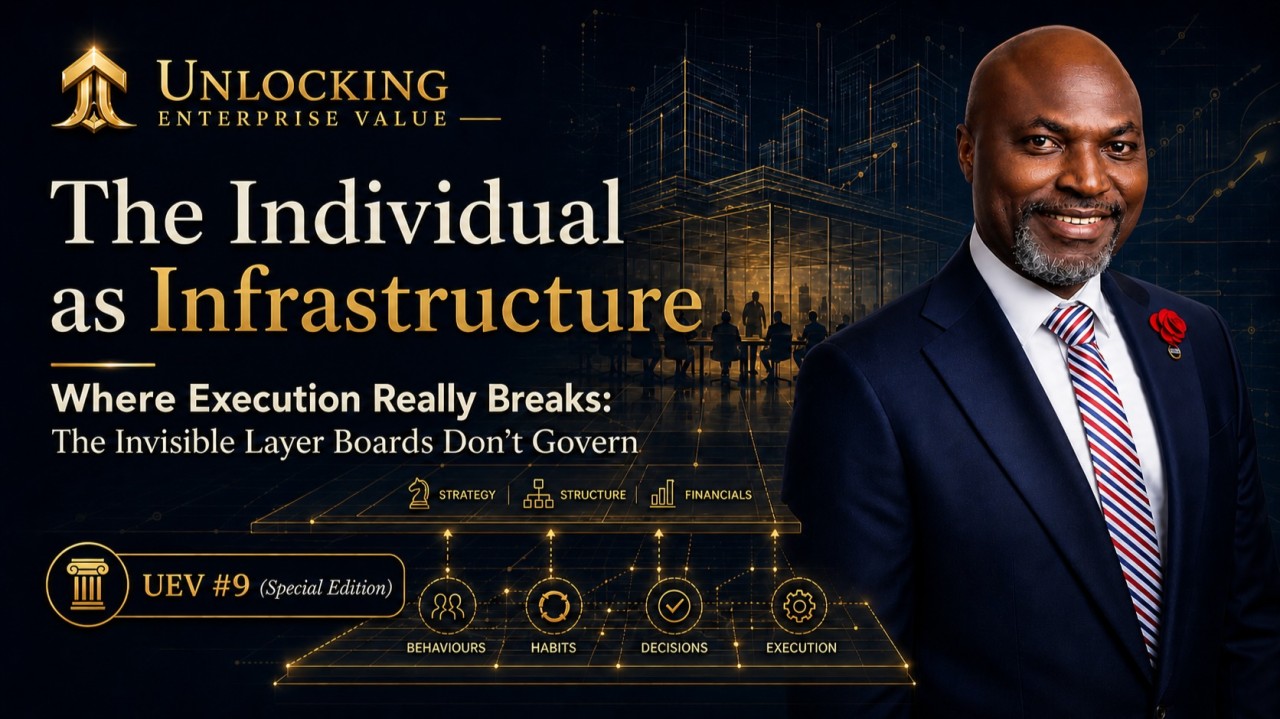
This matters because Boards are generally given strong visibility of strategic intent, financial performance, and formal risk. What they receive less consistently is a disciplined view of whether the organisation is becoming harder to execute through.
That gap matters more than many governance conversations recognise.
When execution starts, depending on repeated intervention, structural weakness is already in the room.
What Boards Should be Testing Before Confidence Turns into Drift: Boards do not need to become operators to govern this well. But they do need to test more than strategic confidence.
Not only:
- Is the strategy clear?
- Are the right leaders in place?
- Are performance targets being met?
But also:
- Where does execution still require disproportionate escalation?
- Which decisions are formally owned, and which are still resolved through influence or intervention?
- What has become harder to execute as the organisation has grown?
- Where is friction being tolerated rather than designed out?
- Which priorities look aligned at the top but lose coherence in delivery?
These questions matter because drift rarely begins as disagreement with strategy.
More often, it begins when the organisation becomes progressively less able to carry that strategy through the enterprise with clarity, speed, and consistency.
That is a structural issue before it becomes a strategic one.

Why is this a Governance Issue, not just a Management Issue? The cost of seeing this late is not merely operational. Once structural weakness is embedded, the business becomes more expensive to move and less reliable to steer.
What follows is familiar:
- slower execution
- weaker accountability
- rising management drag
- reduced capacity for further change
- greater dependence on a small number of individuals to preserve momentum
At that point, Board oversight cannot be confined to whether the strategy is still right.
It must also ask whether the enterprise beneath it is still fit to carry it. That is the governance issue beneath the leadership issue. Not whether management remains confident. But whether the conditions for execution are deteriorating behind that confidence.
What Strong Boards Understand: Strong Boards know that strategic confidence and structural fragility can coexist for longer than most reporting suggests. They recognise that repeated escalation is not always evidence of executive commitment. It can also be evidence that the system is no longer holding its shape.
And they understand that when structural weakness is left unchallenged, strategy eventually starts travelling through an organisation that cannot support it cleanly.
That is when a good strategy begins to underperform. Not because the direction is wrong. But because the enterprise beneath it is no longer built strongly enough to carry it.
By the time strategy visibly falters, structural weakness is usually no longer emerging. It is already embedded.
Three Questions for Boards and C-level Leaders
- Where is management confidence masking repeated organisational strain?
- What does execution still require from senior leaders that the system itself should now be able to hold?
- If strategic ambition increased materially from here, what in the enterprise would stretch first — and why?
Consulted and selected references for further reading
- Argenti, P. A., Berman, J., Calsbeek, R., & Whitehouse, A. (2021, September 14). The Secret Behind Successful Corporate Transformations. Harvard Business Review.
- McKinsey & Company. (2019, July 10). Why do most transformations fail? A conversation with Harry Robinson.
- McKinsey & Company. (2022, March 29). Common pitfalls in transformations: A conversation with Jon Garcia.
- McKinsey & Company. (2023). The State of Organisations 2023.